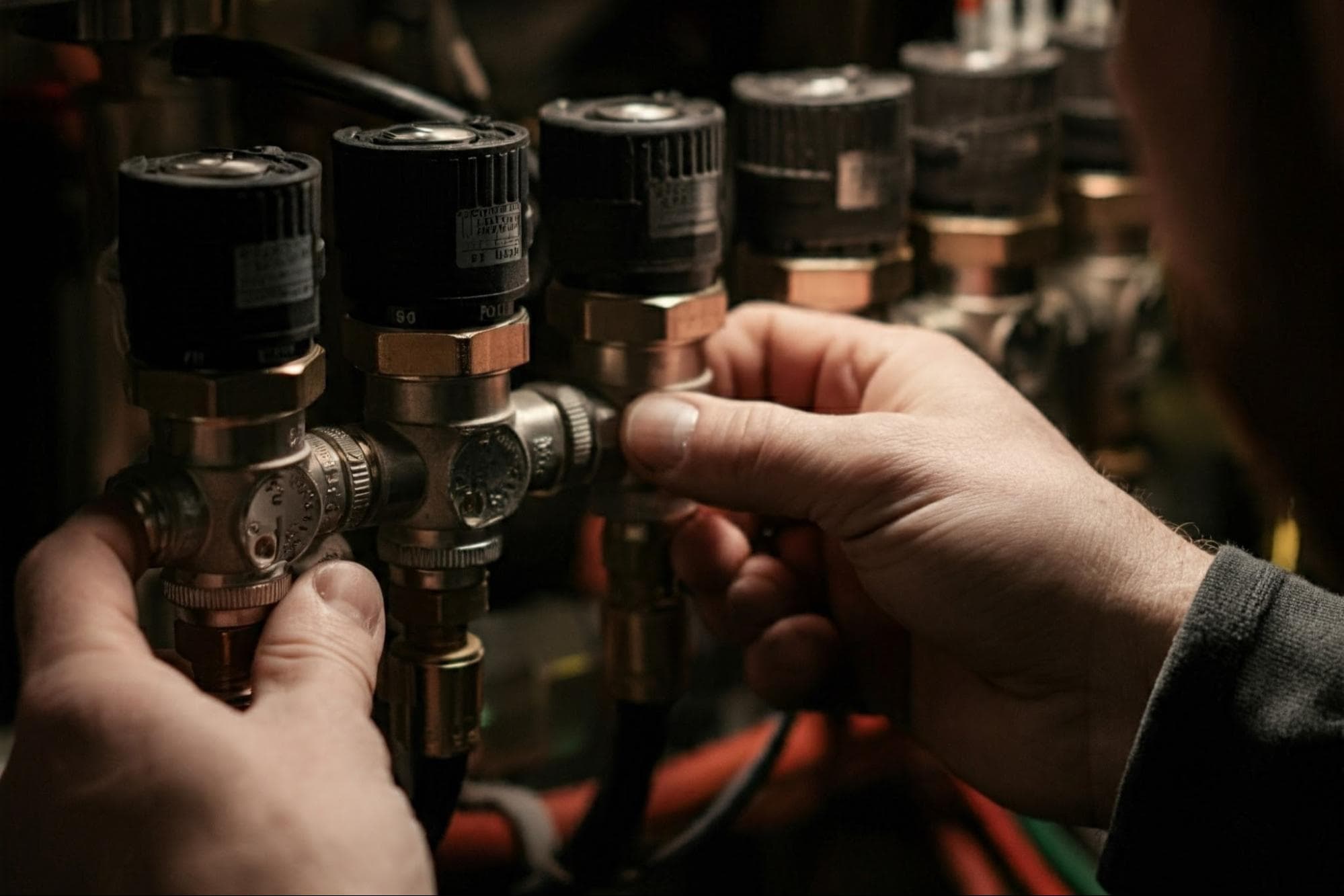
In a world dominated by digital technology, it’s easy to forget the ingenious solutions that came before. Pneumatic thermostats, once a staple in building temperature control, might seem like relics of a bygone era. But are they truly obsolete, or do these analog wonders still hold relevance in modern HVAC systems? Let’s dive into the world of pneumatic thermostats, exploring their inner workings, advantages, and whether they still have a place in today’s buildings.
Understanding Pneumatic Thermostats
Pneumatic thermostats, unlike their modern electronic counterparts, rely on air pressure rather than electricity to regulate temperature. They operate on a simple yet effective principle: the expansion and contraction of air in response to temperature changes.
The Mechanics of Air Pressure Control
A typical pneumatic thermostat consists of a sealed bellows filled with air and a connected valve. As the temperature rises, the air inside the bellows expands, increasing the pressure. This pressure change activates the valve, which in turn adjusts the flow of air or water to the heating or cooling system. Conversely, as the temperature drops, the air contracts, reducing the pressure and signaling the valve to adjust the system accordingly.
A Simple, Reliable System
This purely mechanical system, while seemingly rudimentary, offers a surprising degree of accuracy and reliability. Without complex electronics or software to malfunction, pneumatic thermostats are remarkably resistant to failure. This robustness makes them particularly well-suited for harsh industrial environments or locations where power outages are frequent.
Advantages of Pneumatic Thermostats
While they may not boast the sleek design or advanced features of digital thermostats, pneumatic thermostats offer distinct advantages that make them a viable option in certain situations:
Durability and Longevity
As mentioned earlier, pneumatic thermostats are incredibly durable. Their simple design and lack of delicate electronic components make them resistant to damage from power surges, electrical interference, and even physical impact. This longevity translates to reduced maintenance costs and a longer lifespan compared to electronic thermostats.
No Electricity Required
One of the most significant advantages of pneumatic thermostats is their independence from electricity. This makes them ideal for areas where power supply is unreliable or unavailable, such as remote locations or historical buildings with limited electrical infrastructure. They also eliminate the risk of electrical malfunctions or fire hazards associated with electronic thermostats.
Cost-Effectiveness
Generally, pneumatic thermostats are less expensive to purchase and install than their electronic counterparts. This cost-effectiveness can be a significant factor, especially in large buildings or facilities with numerous zones requiring individual temperature control.
Resistance to Environmental Factors
Pneumatic thermostats are less susceptible to interference from environmental factors such as humidity, dust, and electromagnetic fields. This makes them suitable for industrial settings or areas with challenging environmental conditions where electronic thermostats might struggle.
Limitations of Pneumatic Thermostats
Despite their advantages, pneumatic thermostats also have limitations that have contributed to their decline in popularity:
Limited Functionality
Compared to modern digital thermostats, pneumatic thermostats offer limited functionality. They lack features like programmable schedules, remote control, and integration with smart home systems.
Accuracy and Responsiveness
While pneumatic thermostats provide reasonable accuracy, they may not be as precise as electronic thermostats with advanced sensors and algorithms. Their response time to temperature changes can also be slower.
Calibration and Adjustment
Pneumatic thermostats require periodic calibration and adjustment to maintain accuracy. This can be a more involved process compared to the simple adjustments typically required for electronic thermostats.
Applications of Pneumatic Thermostats
While they may not be the first choice for modern homes, pneumatic thermostats still find applications in specific settings:
Historic Buildings
In historic buildings where preserving the original aesthetic is crucial, pneumatic thermostats can blend seamlessly with the existing architecture. Their vintage appeal and compatibility with older HVAC systems make them a suitable choice.
Industrial Environments
As mentioned earlier, the durability and resistance to environmental factors make pneumatic thermostats ideal for harsh industrial environments. They can withstand extreme temperatures, dust, and vibrations that might damage electronic thermostats.
Remote Locations
In remote locations with limited access to electricity, pneumatic thermostats offer a reliable and self-sufficient solution for temperature control.
Specialized Applications
Pneumatic thermostats are also used in specialized applications where their unique characteristics are beneficial. For instance, they are sometimes employed in laboratories or clean rooms where electrical interference is a concern.
Conclusion
Pneumatic thermostats, though considered a technology of the past, still offer valuable benefits in specific applications. Their durability, independence from electricity, and cost-effectiveness make them a viable alternative to electronic thermostats in certain situations. While they may not be suitable for every modern home, they continue to play a role in historic buildings, industrial settings, and specialized applications. So, while they may be a “blast from the past,” pneumatic thermostats are far from obsolete.